Physical Address
304 North Cardinal St.
Dorchester Center, MA 02124
Physical Address
304 North Cardinal St.
Dorchester Center, MA 02124

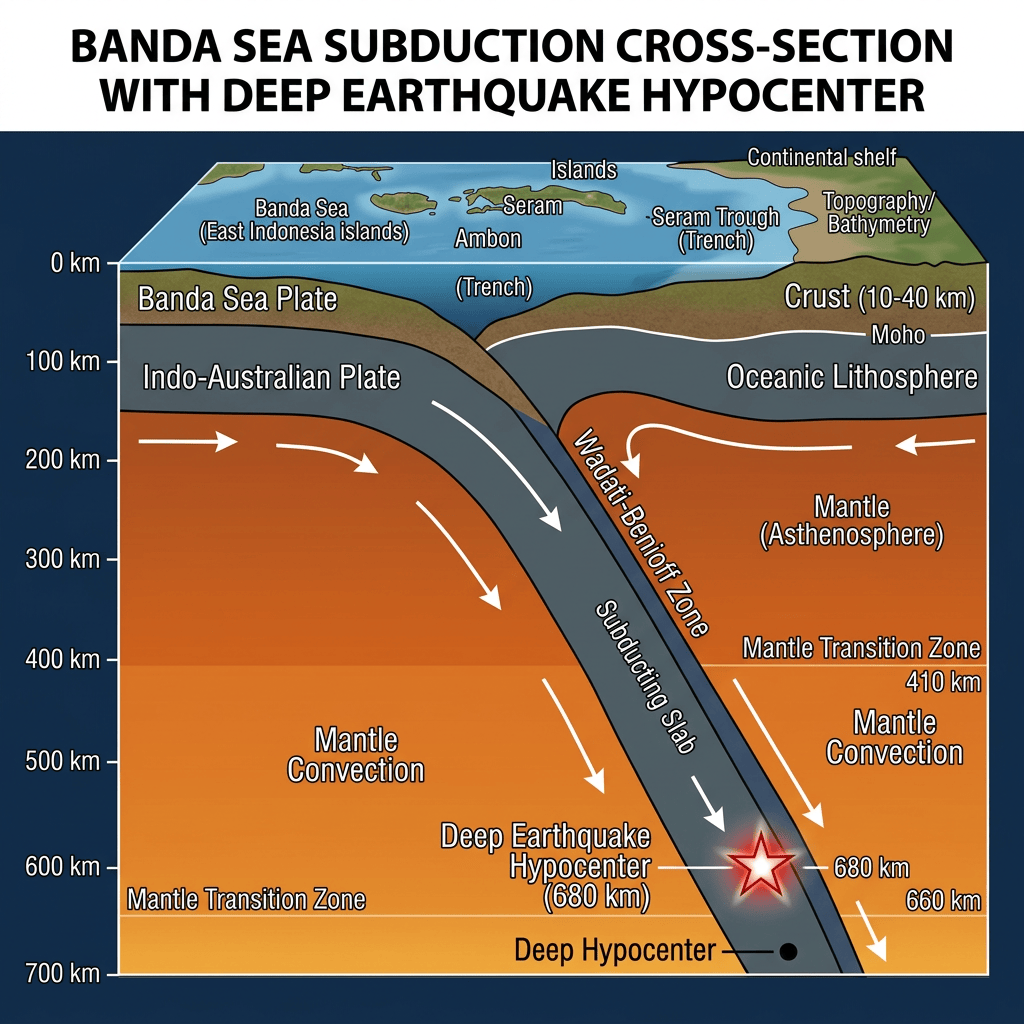
A powerful magnitude 7.0 earthquake struck the Banda Sea on 9th December 2015, occurring in one of the world’s most complex and active tectonic regions. Despite its strength, the offshore location and depth helped limit widespread damage.
On 9 December 2015, seismic monitoring agencies recorded a major magnitude 7.0 earthquake in the Banda Sea, a region known for frequent moderate‑to‑strong seismic activity.
Key characteristics of this event:
The Banda Sea lies within the Molucca–Banda subduction system, where multiple tectonic plates interact, making strong earthquakes a regular occurrence.
The Banda Sea is one of the most geologically complex regions on Earth. It is shaped by the interaction of several tectonic plates, including:
This region is characterised by:
Earthquakes of magnitude 7.0 are not unusual here due to the intense tectonic stress and plate movement.
Although strong, the earthquake’s offshore location meant that:
The Banda Sea has produced numerous significant earthquakes over the decades, including deep‑focus events exceeding magnitude 7.0. This 2015 earthquake fits the long‑term pattern of strong seismicity associated with the region’s active subduction zones.
Following the earthquake, monitoring agencies continued to track:
Authorities confirmed that the event posed no tsunami risk, as the earthquake did not generate the vertical seafloor displacement required for tsunami formation.
The magnitude 7.0 Banda Sea earthquake of 9th December 2015 highlights the region’s ongoing tectonic activity. While powerful, its offshore location and depth helped minimise damage. The Banda Sea remains one of the most seismically active zones in the world, with strong earthquakes forming a regular part of its geological behaviour.
Subscribe to get the latest posts sent to your email.
