Physical Address
304 North Cardinal St.
Dorchester Center, MA 02124
Physical Address
304 North Cardinal St.
Dorchester Center, MA 02124

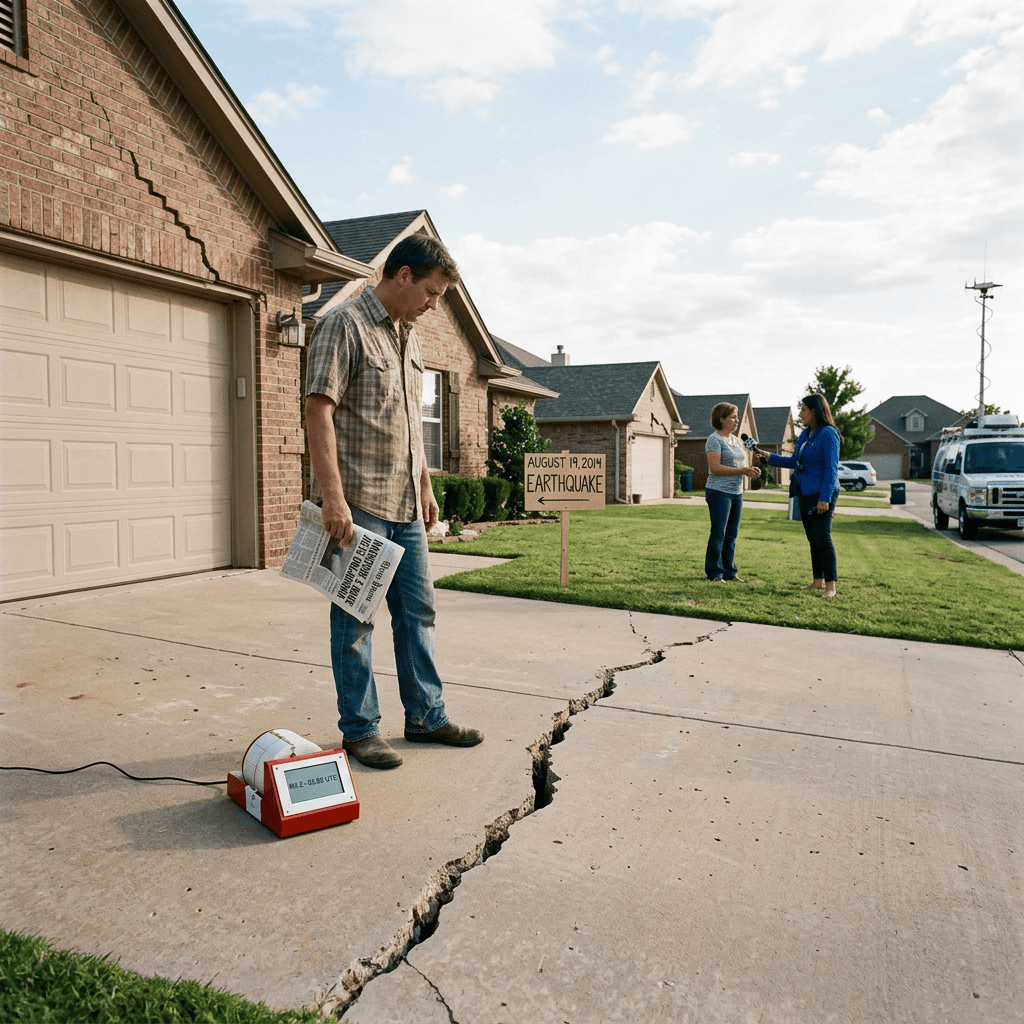
A magnitude 4.2 earthquake struck Oklahoma, USA, on 19th August 2014, according to data from the United States Geological Survey (USGS). Earthquakes of this size are considered light, but they are strong enough to be widely felt across nearby towns and can cause minor, non‑structural damage such as rattling windows, shaking furniture, and small cracks in plaster.
Oklahoma experienced a significant rise in seismic activity between 2010 and 2016, with many earthquakes linked to induced seismicity — a phenomenon associated with wastewater injection from oil and gas operations. Although not every earthquake in the region is directly tied to human activity, the overall increase in seismic events during this period has been well‑documented.
Residents across parts of central and northern Oklahoma reported feeling the earthquake, with brief but noticeable shaking. Magnitude 4.0–4.5 earthquakes in Oklahoma often generate:
No major damage or injuries were reported from the 4.2 event, which aligns with typical outcomes for earthquakes of this magnitude.
Oklahoma sits within the Central and Eastern United States (CEUS) seismic zone, an area historically known for low natural seismicity. However, the region saw a dramatic increase in earthquakes during the early 2010s.
Key contributing factors include:
The 4.2 earthquake on 19th August 2014 occurred during a period of heightened seismic activity, making it part of a broader pattern that helped scientists better understand how human‑related processes can influence fault behaviour.
Earthquakes in the 4.0–4.5 range are important for monitoring because they:
Even though they rarely cause significant damage, these events play a crucial role in understanding Oklahoma’s evolving seismic landscape.
Subscribe to get the latest posts sent to your email.
