Physical Address
304 North Cardinal St.
Dorchester Center, MA 02124
Physical Address
304 North Cardinal St.
Dorchester Center, MA 02124

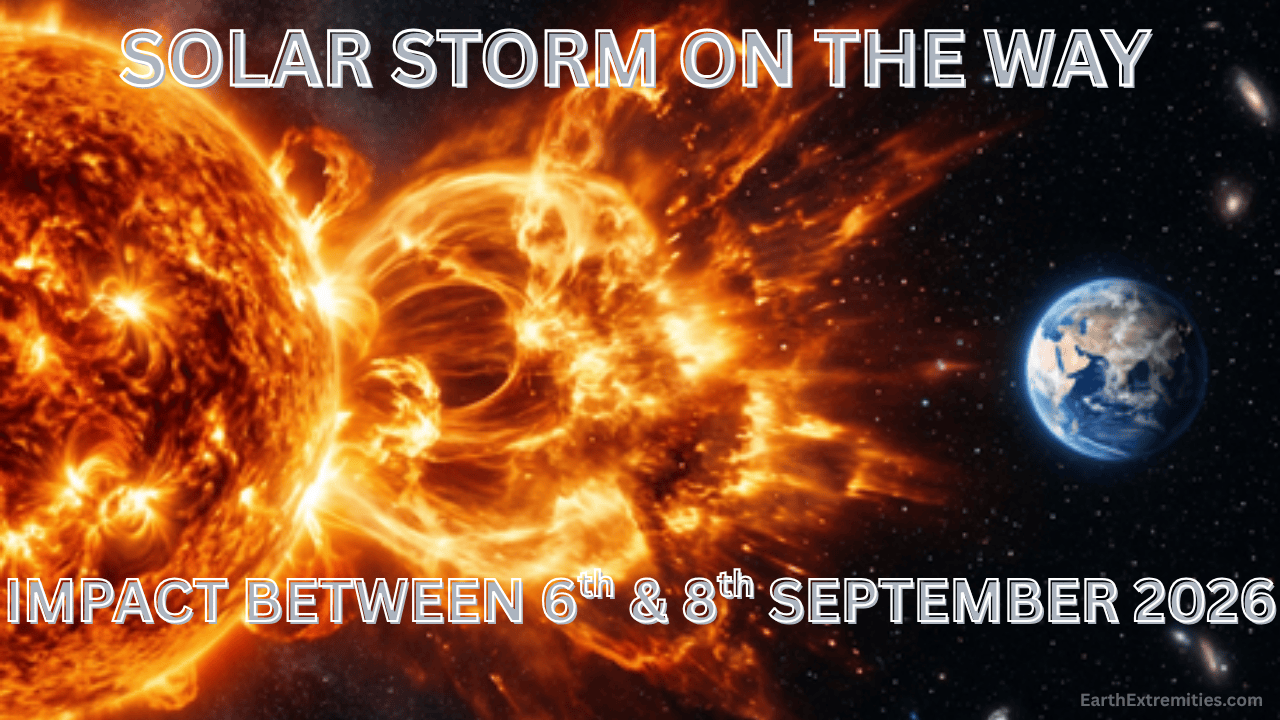
A significant solar storm is forecast to reach Earth’s magnetosphere between 6th and 8th September 2026, according to updated alerts from NOAA and the Space Weather Prediction Center (SWPC). The event is linked to a recent coronal mass ejection (CME) launched from the Sun’s surface, sending a fast‑moving cloud of charged particles toward Earth.
Space‑weather agencies report that the incoming CME has the potential to trigger geomagnetic disturbances, including intensified auroras, fluctuations in radio communications, and possible impacts on satellite operations. While solar storms of this type are not uncommon during periods of heightened solar activity, the timing and strength of this event have drawn attention from scientists and monitoring networks worldwide.
The storm is expected to interact with Earth’s magnetic field over a multi‑day window, meaning effects may vary depending on solar wind speed, density, and magnetic orientation as the CME arrives.
NOAA and SWPC confirmed that the storm originated from:
The CME was detected by space‑based observatories shortly after the eruption, allowing forecasters to model its trajectory and expected arrival window.
While this is not classified as an extreme event, NOAA notes that the storm may produce:
Most effects will be mild and temporary, but monitoring will continue throughout the storm window.
Solar storms are part of the Sun’s natural 11‑year cycle. During active phases, CMEs become more frequent and can influence:
The 6th–8th September 2026 event is expected to be scientifically significant but not dangerous, offering an opportunity for researchers to observe geomagnetic behaviour during a moderate CME impact.
How Solar Storms Affect Earth’s Magnetosphere
Subscribe to get the latest posts sent to your email.
