Physical Address
304 North Cardinal St.
Dorchester Center, MA 02124
Physical Address
304 North Cardinal St.
Dorchester Center, MA 02124

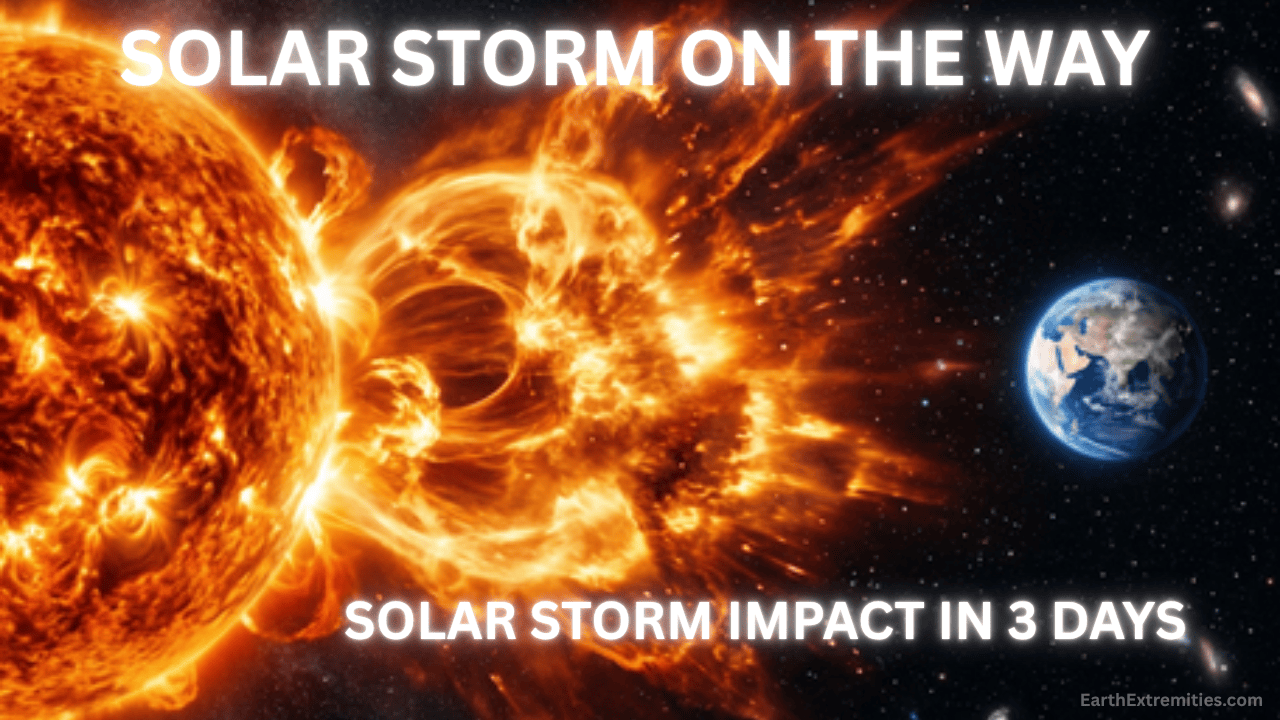
A powerful solar storm is forecast to strike Earth’s magnetosphere between 28th and 29th August 2026, according to data from the National Oceanic and Atmospheric Administration (NOAA) and the Space Weather Prediction Center (SWPC). This event follows a series of heightened solar activities observed earlier in the month, including multiple coronal mass ejections (CMEs) directed toward our planet.
Solar storms occur when intense bursts of charged particles from the Sun collide with Earth’s magnetic field. These interactions can cause:
The magnetosphere acts as Earth’s shield, deflecting most of the solar wind, but strong CMEs can temporarily compress it — leading to visible and measurable effects.
NOAA and SWPC models indicate that the approaching CME may produce a G2–G3 geomagnetic storm, depending on its final velocity and magnetic orientation upon arrival. The impact window is currently estimated between late 28th August and early 29th August (UTC).
Scientists will continue monitoring solar wind speed and density through the ACE and DSCOVR satellites to refine predictions.
While these effects are typically short‑lived, they highlight the importance of ongoing space‑weather monitoring.
Solar activity follows an approximately 11‑year cycle, and the Sun is currently approaching its solar maximum, expected around 2026–2027. This period brings more frequent flares and CMEs, making events like this one increasingly common.
The August 2026 solar storm is a reminder of how dynamic our Sun can be. Although Earth’s magnetic field protects us from most solar radiation, strong CMEs can still produce spectacular auroras and minor technological effects. Stay tuned to NOAA and SWPC updates for real‑time monitoring as the event approaches.
Subscribe to get the latest posts sent to your email.
